

.jpg)
Even today, in 2026, we still see the same bathroom design mistakes being made and repeated by Indian households, not due to a lack of budget but rather to improper planning. Homeowners tend to focus on tiles and fittings, paying little attention to layout, safety, ventilation, and long-term usability. The result? Slick floors, wet walls, storage mess, and bathrooms that wear out in a matter of years.
Being specialists in designing Modern Indian bathrooms, we have audited hundreds of Indian bathrooms across apartments, villas, and builder floors. The 10 most frequent bathroom planning mistakes we continue to observe in Indian homes—and how these mistakes can be corrected with smarter design.
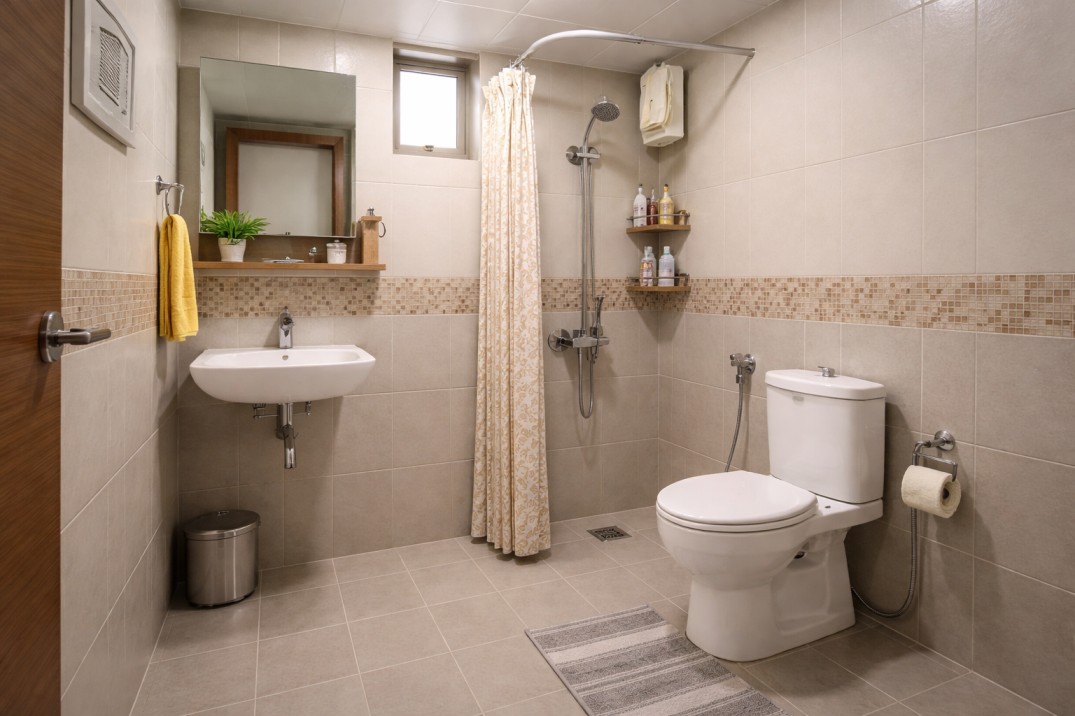
1. Poor Drain Slope Causing Water Stagnation in Indian Bathrooms
One of the most neglected errors in bathroom layout is an incorrect drain slope. With an improperly laid floor slope, the water does not flow in the right direction to the drain, resulting in:
- Water pooling near corners
- Slippery floor tiles
- Long-term seepage issues
It is not a product problem; it is a design and implementation weakness. Correct slope planning for waterproofing and floor leveling would facilitate faster drainage, improved hygiene, and safer daily operations.
2. Choosing the Wrong Tile Size & Finish for Indian Bathroom Layouts
In showrooms, large-format tiles can look impressive, but in small Indian bathrooms, they can lead to waste and uneven levels. Conversely, small tiles may imply too many grout lines, which accumulate dirt and water.
The most common bathroom mistakes are:
- Wet areas (slippery danger) with glossy tiles.
- Neglecting anti-skid tiles on the shower floor.
- The correct size, texture, and finish of tiles must be chosen based on the bathroom layout, drainage, and safety, rather than trends.
3. Poor Bathroom Ventilation Leading to Dampness, Mould & Odour
One of the most significant causes is poor bathroom ventilation. This usually causes:
- Moisture on walls
- Mould growth
- Chipping off paint and broken ceilings.
Numerous Indian bathrooms use a small exhaust fan or no windows at all. This is caused by poor ventilation, which causes long-term damage and unhealthy indoor air. It is one of the most common bathroom layout mistakes we find in apartments. Good design ensures cross-ventilation, an effective exhaust location, and moisture control during the planning process.
4. No Separate Shower Area Resulting in Fully Wet Bathrooms
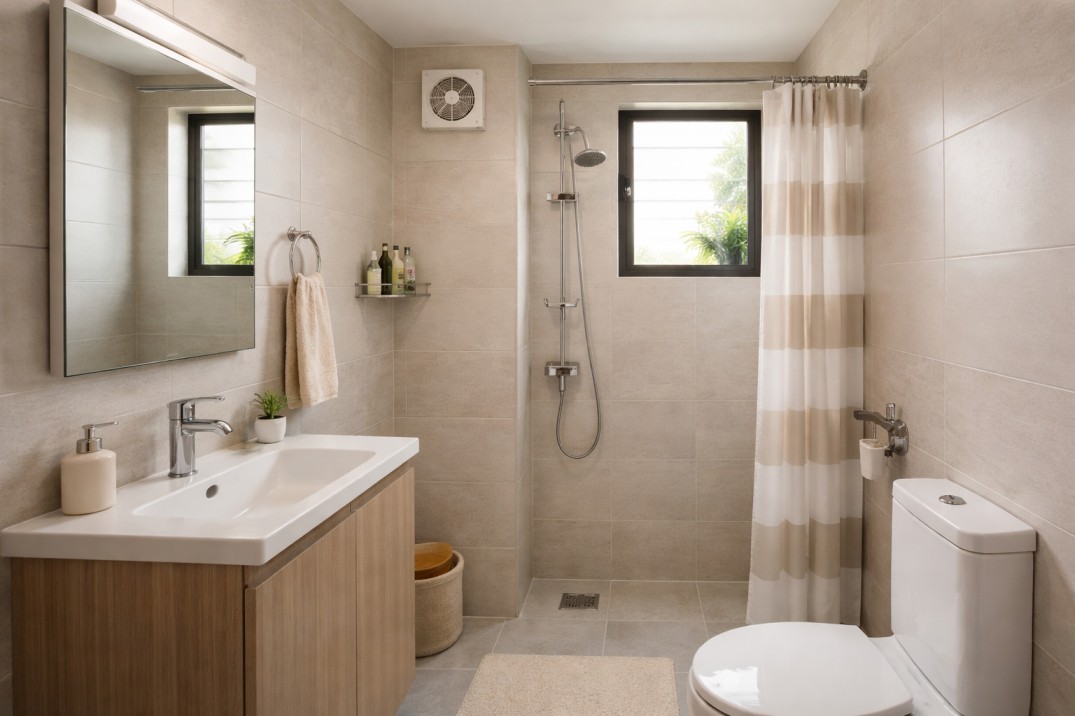
Still common in Indian home bathroom design: the entire bathroom becomes wet after one shower.
This leads to:
- Slippery floor tiles
- Constant moisture formation
- Faster deterioration of cabinets and doors
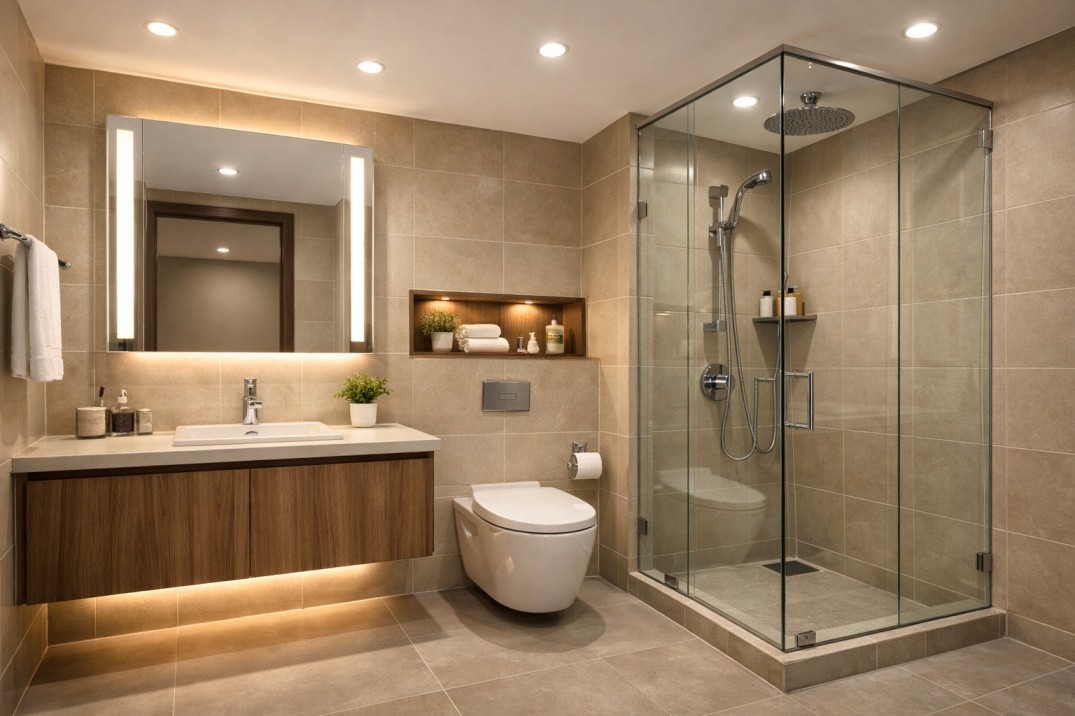
A compact bathroom layout can still include a defined shower zone using glass partitions or smart layouts. Zoning is a design decision that improves hygiene, safety, and longevity of materials.
5. Inadequate Bathroom Storage Planning in Indian Homes
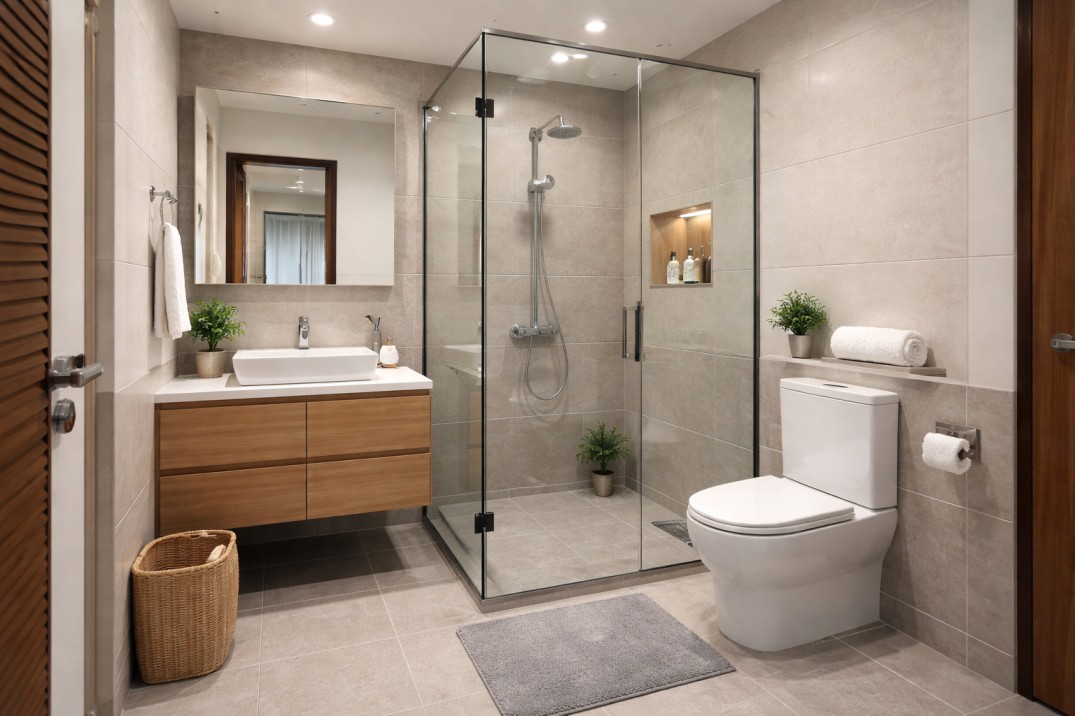
One of the most practical bathroom planning mistakes is ignoring storage. Indian households use multiple toiletries, cleaning supplies, buckets, and accessories. Without proper planning, bathrooms can quickly become cluttered.
Common small bathroom mistakes:
- No recessed niches
- No vanity storage
- No vertical bathroom storage solutions
Designing smart storage into walls and under basins keeps bathrooms organized and visually calm—especially in compact spaces.
6. Poor Bathroom Lighting Design Affecting Safety & Daily Use
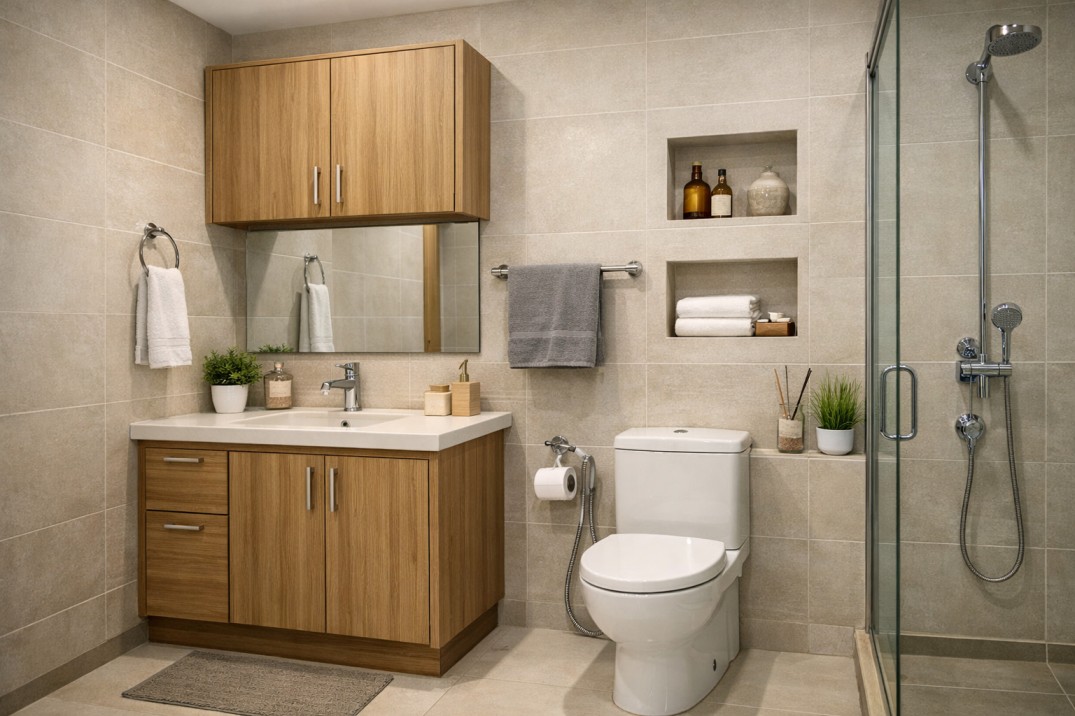
Many bathrooms still rely on a single ceiling light. This creates shadows, poor visibility near mirrors, and a dull atmosphere.
This contributes to:
- Poor grooming lighting
- Unsafe wet areas
- A dated look
A modern Indian bathroom design uses layered lighting, which plays different roles, such as soft accent lighting for depth, task lighting near mirrors for a brighter image. Hence, lighting is a crucial part of design, not décor.
7. Incorrect Bathroom Waterproofing Done Without Proper Planning
Incorrectly waterproofing bathroom areas is a silent disaster. Leaks don’t show immediately, but within months, what you see over time is:
- Damp patches
- Hidden plumbing leaks
- Damage to adjacent rooms
Many homeowners invest in premium tiles but compromise on waterproofing layers. This is one of the most expensive bathroom design mistakes to fix later. Waterproofing must be integrated into the design and execution stage—not treated as an afterthought.
8. Ignoring Vastu Guidelines While Planning Bathroom Layout
For many homeowners, Vastu for the bathroom remains important. Yet, bathrooms are often placed or renovated without considering directional guidelines, leading to discomfort or dissatisfaction—even if the space looks good.
While design should be functional first, aligning layout with basic Vastu principles can help homeowners feel more confident and settled in their homes.
9. Bad Fixture Placement Creating Cramped & Uncomfortable Layouts
In Indian bathroom design, we often see:
- Toilet placed too close to the door
- Basins blocking movement
- Showers spraying onto the vanity
These bathroom layout mistakes reduce functionality & usability. Even premium products feel uncomfortable when the layout is wrong. Proper spacing, circulation planning, and ergonomic design are core to good Indian home bathroom design.
10. Designing Bathrooms for Trends Instead of Long-Term Use
One of the most overlooked common bathroom mistakes is designing only for current trends. Dark tiles, high-maintenance finishes, and impractical layouts may look good in 2026 but age poorly.
A truly modern Indian bathroom balances timeless design with easy maintenance and is future-proof, with planning and durability in mind to save on renovation costs later.
To Sum Up
Most bathroom design mistakes in Indian homes happen because homeowners jump straight into product selection without investing time in design planning. Tiles, taps, and fittings can always be upgraded—but fixing layout, waterproofing, and ventilation errors later is expensive and disruptive.
In 2026, a well-designed bathroom is no longer a luxury—it’s a necessity for hygiene, safety, comfort, and property value. If you’are planning a bathroom renovation, begin with design. Because good design doesn’t just make your bathroom look better—it makes it work better, for years to come.